Kaptox
Battery tools through the winter
Most cordless tools are not worn out by use. They are worn out by five months in a cold shed on an empty pack.
Last updated 29 September 2026
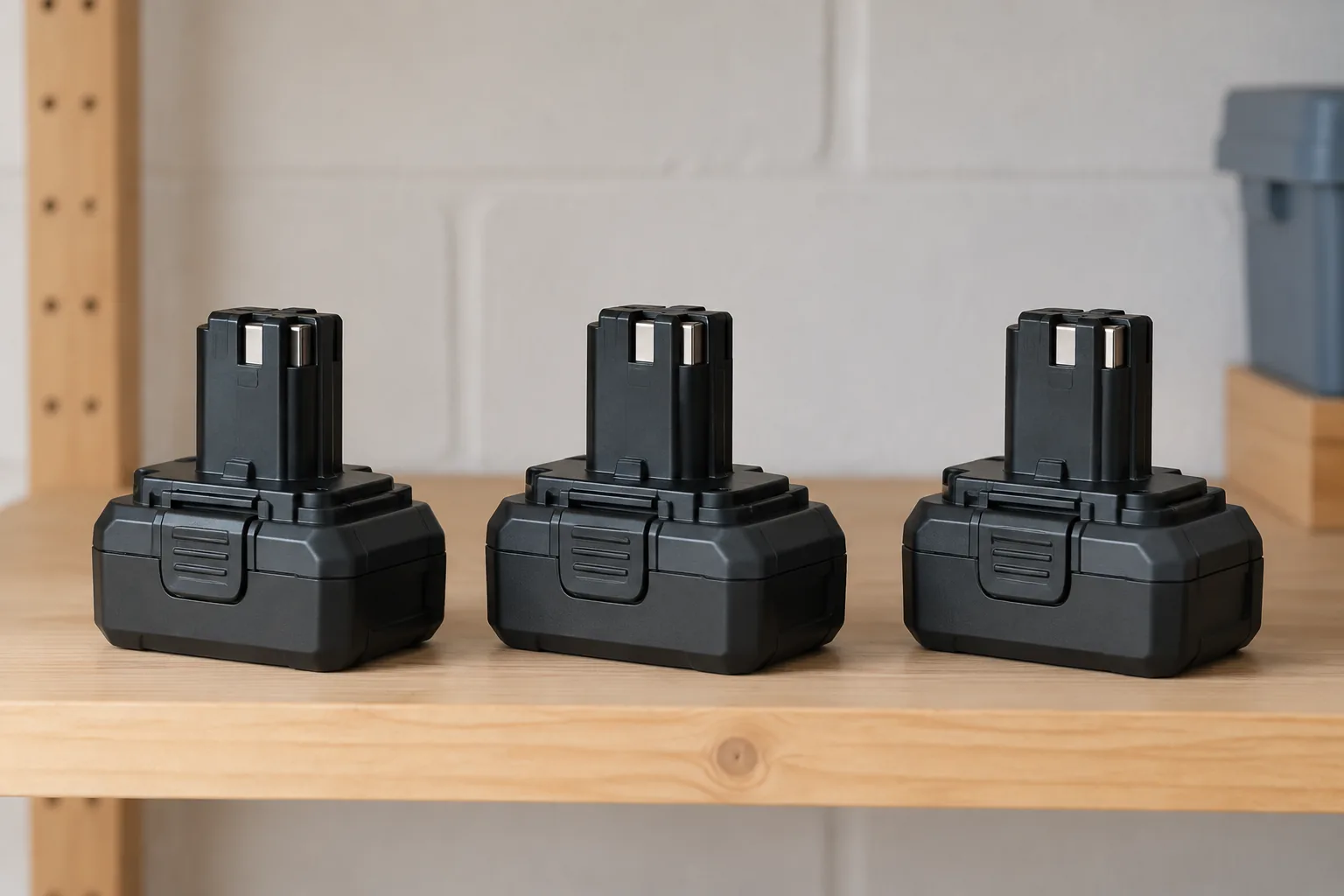
Do not store them empty, and do not store them full
A lithium pack is happiest sitting at roughly half charge. Left completely flat for months it can discharge far enough that a charger will not wake it up again. Left at 100% for months it ages faster than it needs to. Run it down or top it up to somewhere around the middle before it goes away for the winter.
Bring them indoors
The tool can live in the shed. The batteries should not. Cold does the damage slowly and damp does it quickly, and an unheated shed in January is both. A shelf in the house or a dry garage above freezing is enough – it does not need to be warm, just not cold and not wet.
Do not leave them on the charger for months
Charging overnight is fine. Leaving a pack sitting on a live charger from October to April is not the same thing, and there is no benefit to it.
Why it seems weaker in the cold
A battery used at near-freezing gives noticeably less runtime than the same battery in June. That is chemistry rather than a fault, and the capacity comes back as it warms up. If you are working outside in winter, keep the spare pack in a pocket rather than on the ground.
Check in February, not April
The useful habit: put the packs on to charge a few weeks before you actually need them. If one has gone too flat to recover, you find out with time to do something about it, and not on the first dry Saturday of the season with the grass already long.
We do not claim the batteries on these tools swap between models. The manufacturer does not state that they do, so each tool should be treated as coming with its own.